
Getting a tree permit sounds simple at first. You plan your project, submit your documents, and wait for approval. Then the delays start. Weeks go by, and the city asks for revisions. Most property owners think the issue lies in their design plans. It usually doesn’t. The real problem often comes down to the survey mapping.
When parts of the map are missing or don’t meet the survey mapping requirements, the city has no clear way to review the project. So instead of moving forward, everything slows down before work even begins.
Knowing what needs to be included early can save time, money, and a lot of frustration.
Why Survey Mapping Matters for Tree Permits
Tree permits are not just about removing or keeping a tree. The city wants to understand how your project affects the property as a whole. They need a clear picture of what exists today and what will change.
That picture comes from your survey mapping.
When the map is accurate, the reviewer can quickly see where trees stand and how your plans interact with them. If the map feels incomplete or confusing, the review slows down. Instead of moving forward, the process shifts into back-and-forth emails and corrections.
This is where many projects lose momentum.
What Your Property Layout Needs to Show
Every good map starts with a clear layout of the property. This part sets the stage for everything else. If the base layout is off, nothing built on top of it will make sense.
The survey mapping should reflect the true shape and size of the lot. It should match real-world conditions, not an old version of the property or a rough sketch. Even small differences can cause confusion during review.
When the layout is clean and accurate, it becomes much easier to understand the rest of the information on the page.
How Trees Should Appear on the Map
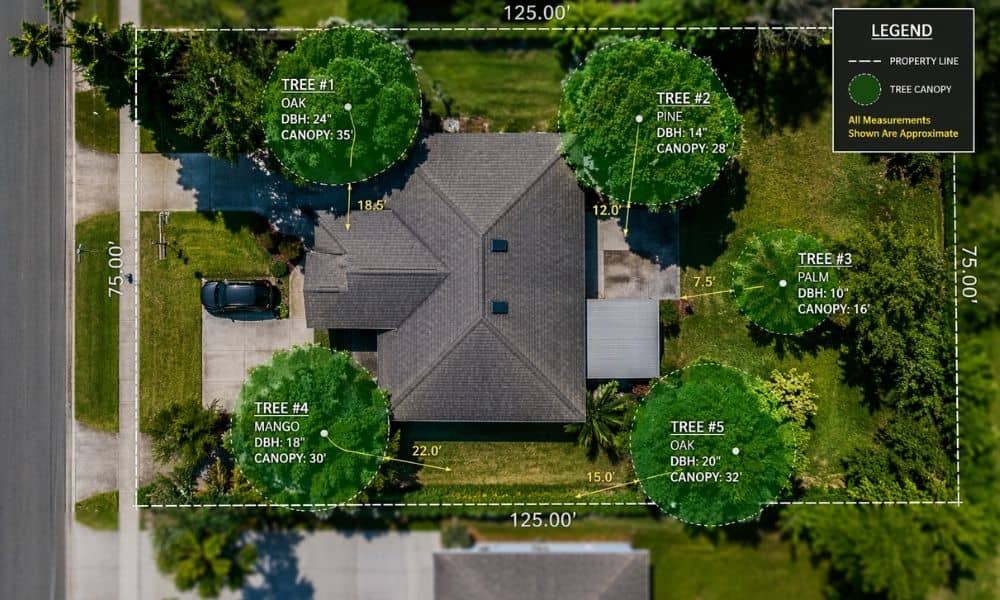
Once the property layout is in place, the focus shifts to the trees themselves. Each one must be shown in the exact location where it stands.
This is where precision matters.
Trees cannot be placed loosely or estimated by eye. They need to be measured and plotted so their position can be verified. The distance between a tree and a structure or property line can change how the city views your application.
When trees are mapped correctly, the reviewer can trust what they see. When they are not, the whole submission comes into question.
Why Tree Details Make a Big Difference
Location is only part of the story. The city also needs to understand the size and condition of each tree.
A large, mature tree will be treated very differently from a smaller one. The spread of the canopy and the size of the trunk both play a role in how decisions are made.
If those details are missing, the reviewer has no way to judge impact. That often leads to a request for more information, which slows the process again.
Clear and complete tree data keeps things moving.
Connecting Trees to What Already Exists
A property is never just trees and open space. There are always existing features that affect how a project moves forward.
The survey mapping should show how trees relate to structures, driveways, and other elements on the site. This helps the city understand how everything fits together.
For example, a tree near a building raises different concerns than one in an open yard. That context matters during review.
Without it, the map feels incomplete.
Showing What You Plan to Build or Change
This is the step many property owners overlook.
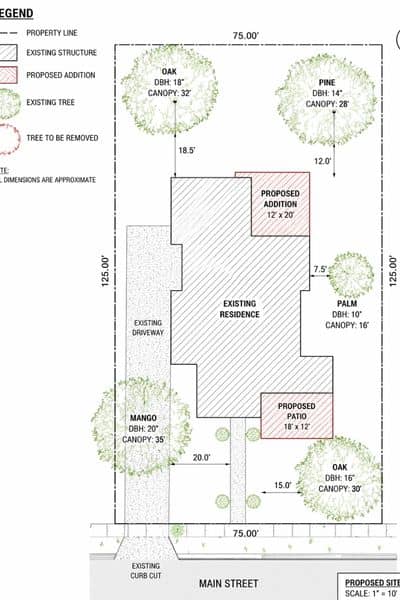
They submit a survey with tree locations but forget to clearly show the planned work. The city then sees the existing conditions but has no clear view of what will change.
That creates a gap.
The survey mapping should make it easy to compare the current layout with the proposed work. When both are visible, the reviewer can quickly understand the impact. When that connection is missing, the application often gets sent back for revision.
Clarity here can make the difference between approval and delay.
Where Most Submissions Go Wrong
The same issues appear again and again.
Some maps show trees but leave out measurements. Others look clean at first glance but lack enough detail to be useful. In some cases, the proposed work is not shown clearly, so the reviewer has to guess how the project will affect the site.
These are not small problems. They stop the process completely.
Even one missing detail can lead to a request for corrections. That adds time and pushes your project further back.
How Proper Survey Mapping Helps You Stay on Track
When survey mapping is done right, everything moves faster. The reviewer has what they need from the start, so there is less need for follow-up questions.
It also helps you as the property owner.
A clear map lets you see potential issues before you submit anything. You might notice that a tree sits too close to a planned structure or that a small change in layout could avoid a problem. Fixing those early is much easier than making changes later.
Good mapping keeps your project on track instead of forcing you to react to problems.
Why Timing Plays a Big Role
Many delays happen because survey mapping is done too late.
If you wait until your plans are final, any issue found in the mapping can send you back to the drawing board. That means more time, more adjustments, and more stress.
It works better when survey mapping is done early in the process. This gives you a clear view of your property before final decisions are made. Your plans can then match what actually exists on the site.
That simple shift in timing can prevent major setbacks.
Working with the Right Team in Miami
Miami has its own rules and expectations when it comes to permits. A map that works somewhere else might not meet local standards.
That’s why local experience matters.
A team familiar with Miami knows what reviewers look for and how detailed the mapping needs to be. They understand what causes delays and how to avoid them.
This kind of experience helps keep your project moving without unnecessary setbacks.
Final Thoughts
Tree permits often feel like a small step, yet they can hold up an entire project. The issue is rarely the idea behind the project. It usually comes down to missing or unclear information.
Strong survey mapping solves that problem.
It gives the city a clear view of your property and your plans. When everything lines up, the review process becomes much smoother.
Getting it right from the start saves time and keeps your project moving forward.