
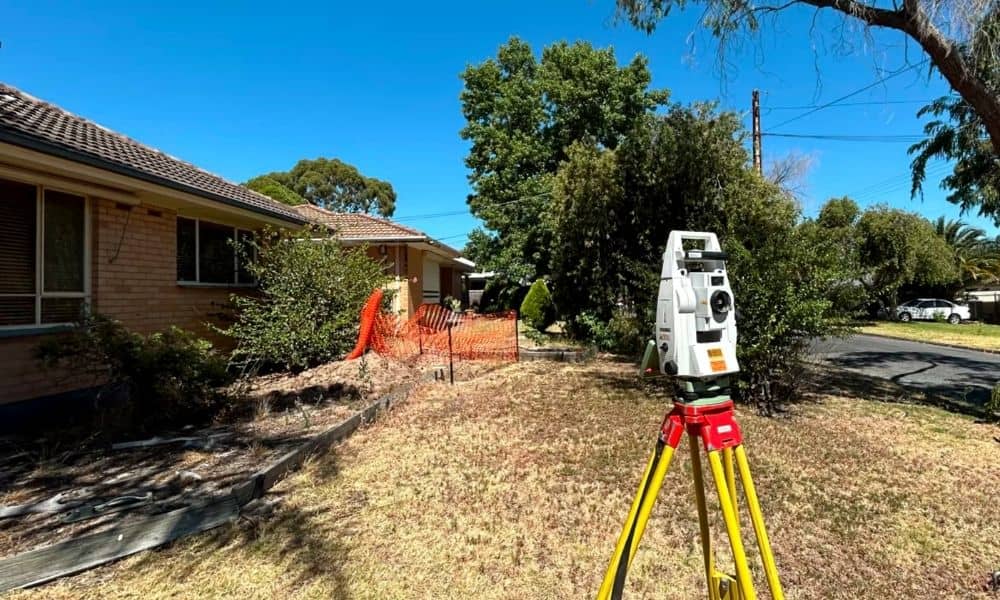
If you own a small lot in Miami, you already know space feels tight. Homes sit close together. Streets slope in different directions. Stormwater rules stay strict. Because of that, your project leaves little room for mistakes. That’s exactly why a topographic survey must do more than show a few elevation points. It must give your architect and engineer the full picture before plans go to the city.
Infill lots come with special challenges. Unlike open land, these sites sit between existing homes, sidewalks, and utilities. Therefore, your survey must capture more than surface details. It must provide clear elevation data, drainage clues, and alignment with property lines. Otherwise, your permit can stall fast.
Why Infill Lots in Miami Demand More Precision
Miami’s growth has filled in many empty parcels. As a result, most new builds now rise between older homes. However, older homes rarely sit at the same elevation. One house may sit several inches higher than the next. That small difference can change how water moves across the site.
In addition, Miami deals with heavy rain and flood concerns. Because of this, city reviewers pay close attention to drainage and slab height. They want proof that your grading plan won’t push water into a neighbor’s yard.
For that reason, your topographic survey must provide accurate, detailed elevation data. It must give engineers enough information to design drainage properly. If the data lacks depth, the city may request revisions.
The Importance of a Clear Vertical Reference
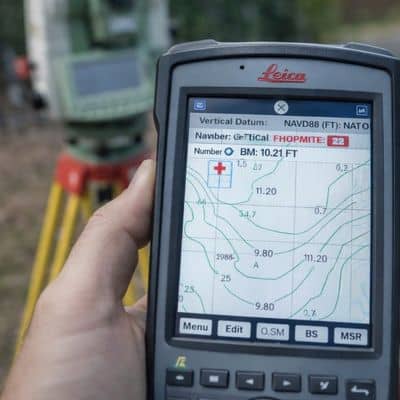
Every elevation on your site depends on one starting point. Surveyors call this the vertical datum. In simple terms, it acts as the “zero mark” for all height measurements.
If your topographic survey does not clearly state the vertical reference, your engineer cannot confirm slab height or flood compliance. Even worse, mismatched elevation systems can cause confusion during permit review.
Therefore, the survey should show:
- The vertical datum used
- The benchmark location
- The benchmark elevation
When everyone works from the same elevation reference, designs stay accurate. That clarity protects your schedule and prevents redesign.
Elevation Density: Why a Few Points Are Not Enough
Many people assume a topographic survey only needs a handful of elevation shots. However, infill lots require much more detail.
Engineers rely on elevation points to build a digital surface model. That model predicts how water will flow across the land. If the survey includes too few shots, the model becomes unreliable.
For example, your survey should capture:
- Grade breaks where slopes change
- Driveway transitions
- Sidewalk and curb elevations
- Swales or low areas
- Threshold elevations at doors and garages
Without these details, the grading plan becomes guesswork. On a small lot, even a two-inch error can lead to water problems. Therefore, dense and accurate elevation data makes a major difference.
Understanding Drainage Before the City Asks
Miami reviewers care deeply about drainage. They want proof that water has a safe path off the site. If water collects or spills into adjacent property, your permit can face delays.
A permit-ready topographic survey should clearly show surface flow patterns. It should document low points, inlets, curbs, and natural drainage paths. Furthermore, it should reflect the street elevation because runoff often connects to the road system.
When engineers see clear drainage information, they can design grading that moves water properly. As a result, your plans look stronger during review.
Why Adjacent Elevations Matter More Than You Think
On a vacant lot, your project stands alone. On an infill lot, your project interacts with neighbors.
For that reason, your topographic survey should capture visible slab elevations from nearby homes. It should also record driveway tie-ins and fence line grade changes. These details help engineers confirm that your finished floor height will not direct water toward adjacent properties.
City reviewers often compare your design to surrounding elevations. If the survey lacks that information, they may request clarification. Therefore, capturing adjacent data early helps prevent back-and-forth revisions.
Coordination With Property Lines and Setbacks
Although a topographic survey focuses on elevation, it must align correctly with property boundaries. Your engineer needs accurate lot lines to design within setbacks.
If the survey misaligns with boundary information, your building footprint could shift too close to a setback line. That mistake can trigger redesign and delay.
For that reason, surveyors must tie elevation data into the established property layout. Clear alignment keeps the project compliant from the start.
Existing Features That Affect Design
Infill lots rarely come empty. Even when structures do not exist, you may find sidewalks, pads, retaining walls, or old driveways.
A thorough topographic survey should document all visible improvements. These features affect grading and drainage. For example, an old concrete pad can block natural runoff. Similarly, a retaining wall can trap water if the grading ignores it.
When the survey captures every surface feature, your design team can work around existing conditions instead of discovering them later.
Deliverables That Keep Your Engineer Moving
Even the best field work loses value if the deliverables fall short. Your engineer needs more than a printed drawing. They need digital files that integrate with design software.
A permit-ready topographic survey should include:
- A sealed PDF drawing
- A CAD file for modeling
- Clear benchmark notes
- Updated survey date
When the files arrive clean and organized, engineers move forward quickly. As a result, your plans progress without unnecessary pauses.
Small Data Gaps That Cause Big Delays
Many permit resubmissions happen because of missing details, not major errors. For instance, a survey might omit curb elevations or fail to show the vertical datum. While these may seem minor, they raise questions during review.
Once questions appear, timelines stretch. Meanwhile, holding costs increase. Therefore, investing in a complete topographic survey upfront often saves weeks later.
Building With Confidence From Day One
A Miami infill lot demands precision. Because land sits close together and drainage rules stay strict, your survey must provide accurate elevation intelligence.
A strong topographic survey does more than map contours. It guides slab height decisions, supports drainage design, aligns with property boundaries, and helps your engineer submit plans with confidence.
When your survey includes complete elevation data and clear references, your project starts on solid ground. And in a city like Miami—where inches matter—that clarity makes all the difference.